
Morocco by Campervan: Discovering the Atlantic Coast
Discovering Morocco aboard our campervan was a decision made on the fly. We had always been fascinated by the country but had never had the chance to visit. Then one day, while sleeping along the Andalusian coast (guide in Italian) and watching the border of another continent in the distance, we decided to buy ferry tickets and reach Africa “overland.”
Our decision was certainly influenced by the more-than-positive stories of our friends Rose and Fabio from “Giramondo ma non troppo” (which you can listen to here ), who never stopped supporting (and putting up with) us, and who gave us invaluable tips on places to stop and visit.
At the end of January 2023 we bought our ferry tickets from Algeciras to Tanger Med and boarded together with Olimpia and Sakè, our dog and cat (here for the documents you need), and set off on our adventure!
Table of contents
Before We Start
We stayed in Africa for 4 months, 3 of them in Morocco, using every single day allowed by our visa to make a Grand Tour of the country, which we explored from top to bottom, including a few long stops in wonderful places. Given how much time we spent in the country, we decided to put our itinerary in writing across three articles: in this first one you’ll find all the stops we made along the Atlantic coast (interrupted to carry on into Mauritania and Senegal), the second covers the itinerary through the interior, and the last one covers the Mediterranean coast before heading back to Europe.
Itinerary
In this section we’ll list all the stops of our adventure, taking you with us from north to south of Morocco, always along the Atlantic coast: starting from Tangier we’ll arrive together in Agadir. From there you can turn towards the interior and read the dedicated article, or keep going south, through the disputed territory of Western Sahara (which sounds scary but is actually very safe!) all the way to Dakhla and the border with Mauritania!
If you just want to read our itinerary with only the stops, you’ll find it here, while at the end of this article you’ll find the map with all the pins for our stops (almost all wild camping) and the unmissable places of interest.
As for ferry tickets, we relied on Viajes Normandie agency, better known as Gutierrez , in Algeciras. Specifically, we spent 300 euros in total for a round trip from Algeciras to Tanger Med with open tickets valid for a year, meaning no need for advance booking. We chose to cross to Tanger Med because part of the customs paperwork is handled during the crossing, on board the ship. If you choose Ceuta you save 50 euros, but all the customs paperwork is done once you land in the Spanish enclave.
Day 1: we arrived at Tanger Med around 1pm and, after going through customs and the scanner, we headed straight to Assilah, 80 km to the south. We immediately got a taste of the souk atmosphere, the typical Moroccan market, and strolled along the walls of this colourful, lively little town.
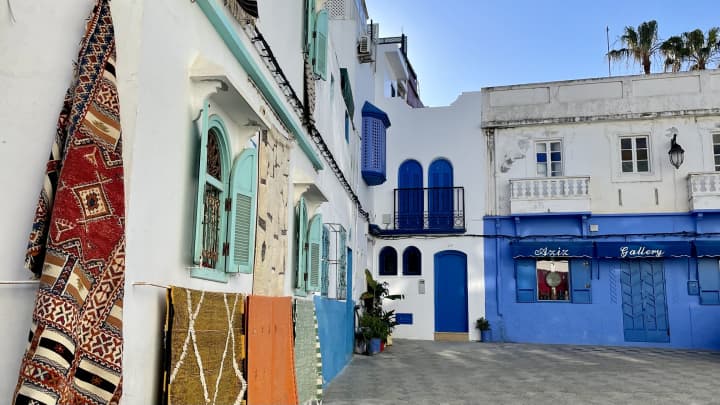
Day 2: we left Assilah and headed to Larache, a stop we found by chance on the road map. From a distance, the medina looks like a heap of white and blue dice. Along the way we sadly saw numerous open-air rubbish heaps, with children and animals rummaging through the debris (forgive our honesty, but this scene weighed on our hearts). We then arrived in the small village of Moulay Bousselham, lively with fishermen who run excursions in the small lagoon. There’s also a small covered souk here. Given the amount of rubbish and stray dogs, we got back on the road, reaching a free car park near a hotel, with the option of a walk along the ocean.
Day 3: we visited Salè, parking near the Mosque and immersing ourselves in the streets among the locals, before crossing the river of the same name and heading to Rabat, the country’s capital. The gap here is really striking.
We discovered a city in strong growth, with cutting-edge buildings, modern public transport, a well-kept Kasbah with tidy gardens, and a genuinely clean souk full of detail. Leaving the capital, we headed to El Jadida, a former Portuguese colony.
Day 4: after a stroll along the walls of El Jadida, admiring the small workshops of local craftsmen, we followed the Atlantic coastline, stopping on the cliffs for lunch with a view, and headed to Ouladida, famous for its oyster farms.
Day 5: leaving Ouladida, we reached Safi, a city known for its ceramics production. Thanks to a local man, we learned that here, unlike other towns, Muslims, Jews, and Christians lived (and still live) side by side without problems, in houses with adjoining doors, which is why you won’t find a Mellah (Jewish quarter) here, unlike in other Moroccan cities. Walking through the little streets, you reach the area with the kilns for firing ceramics and the cooperatives selling the finished products.
Here we got to open our eyes to a way of life completely different from our own, and we told the story in this video.
Day 6: we reached Essaouira in the morning for a walk through the alleys and the souk. Part of the city, the Jewish Mellah, was under renovation. We made it to the port and then had a fish sandwich for lunch. Worth mentioning is a good co-working space here, (Noqta space) , where we took advantage of a good connection and a quiet, peaceful space to work.
Day 7: we took the chance, having met an Italian couple, to walk around Essaouira again with them, before heading to a campsite overlooking the coast, in Sidi Kaouki, to watch the sunset on the beach.

Day 8: we stayed at the campsite, taking advantage of the calm to go for a lovely walk and have lunch together.
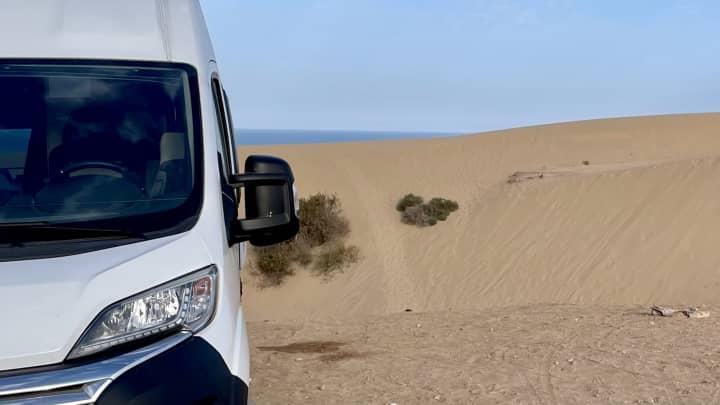
Day 9-10: we went to Had Draa to visit a famous Sunday rural market dedicated to both fruit and vegetables and livestock. A unique atmosphere, it felt like stepping back many years in time. Prices were genuinely good, but watch out for pickpockets. From here we headed south of Imsouane, wild camping for two days right by the dunes, taking lovely walks and enjoying a magical sunset.
Day 11: leaving the coast, we reached Agadir, which however greeted us with traffic and chaos that didn’t make us want to stick around.
After stopping at a Carrefour to do some shopping, we set off again towards Tifnit, a small fishing village, for lovely walks along the coast.
Day 12: we had lunch together by the ocean, taking advantage of a small restaurant grilling fresh fish, and headed in the evening towards Tiznit, the “mecca” for craftsmen specialised in upholstery and campervan bodywork (with really good prices).
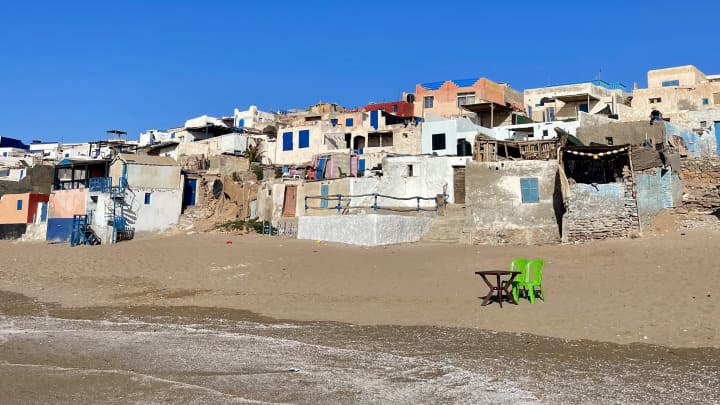
Here we got to know the famous “fake guards”, characters who pass themselves off as parking attendants. We politely (and rightly) refused to pay, as we did on several other occasions — it’s a free choice.
Day 13: we took the chance to have the craftsmen fix a problem with our portable solar panel, then visited the centre of Tiznit, walking through the souk and having lunch in a small place frying sardines fresh on the spot (10dh/1 euro for a kilo of sardines).
We then visited the neighbourhood with the blue fountain and set off again towards Mirleft for a walk in the bay nestled between the cliffs.
From here you can continue towards the interior by clicking here, or carry on the adventure towards the city of Dakhla and join hundreds of other campervanners at PK25, or push even further south and reach the border with Mauritania.
Day 14: an annoying sandstorm forced us to move away from the coast, reaching for lunch the car park near the souk of Sidi Ifni. From here we decided to carry on without seeing the famous Legzira cliffs, practically impossible to visit in the middle of the storm (though we made it on our way back), and reached Guelmin, home to the last well-stocked supermarket with European products, il Marjane , as well as a livestock market held on Saturday mornings.
By the way, have you ever driven through a sandstorm?
Day 15: we visited the souk in Guelmin and watched the famous trade in goats and camels, before moving on to the Tighmert oasis for lunch. Unfortunately the wind and the sandstorm gave us no rest, so we got back on the road, reaching Tan Tan without meeting a soul.
From here on, numerous checkpoints began, where we were asked for our “fiche de police,” documents recording the passengers’ and vehicle’s details. We wrote them out by hand, including: - first and last name - passport number - vehicle plate number - police number (noted in the passport on entry)
Day 16: we set off again towards Akhfennir, where we made use of the Mosque’s forecourt to have lunch sheltered from the gusts of wind, before reaching Tarfaya in the late afternoon. Here we wanted to visit the museum dedicated to The Little Prince , since the famous novella is said to have been written here, but unfortunately we found it closed.
Halfway there is Khenifiss National Park, with a great spot to stop at Naïla. Here you can take long walks and, if the weather is kind, take a boat trip to see the flamingos.
Day 17: leaving Tarfaya, we made a small detour onto the N1 to see the shipwreck that used to connect Morocco with the Canary Islands, then, still accompanied by strong wind, reached Laayoune, a heavily militarised city.
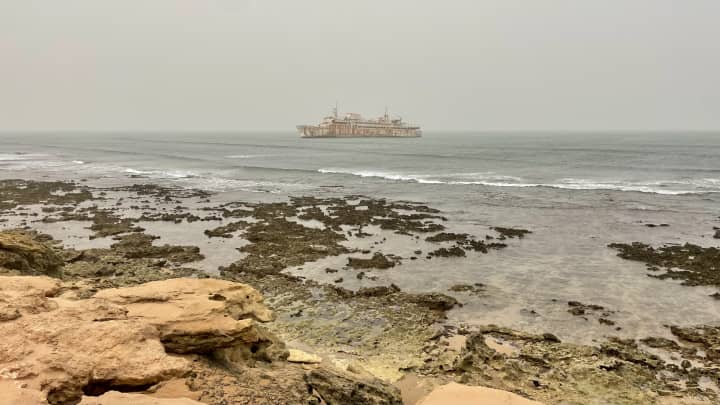
Day 18: we reached Boudjour for a lunch break but found everything closed because of the windstorm, so we got driving, crossing the disputed territory of Western Sahara and reaching the small hamlet of Oued Karaa, with direct access to the ocean.
Day 19: we walked along the shore, discovering the small fishing village and wandering among the tiny shacks, noticing the huge amount of debris mixed with sand, washed up by the sea and dumped by people with a very different — if not practically nonexistent — recycling culture compared to ours. In the afternoon we headed towards Dakhla.
Day 20-21: we reached the city centre and took advantage of a bar’s wifi to work for a couple of days with a stable connection, visited the souk and the streets of the town, and admired the large statue of a teapot. Dakhla is home to PK25, a famous car park and gathering point for campervanners (some stay here for 6 months…!).
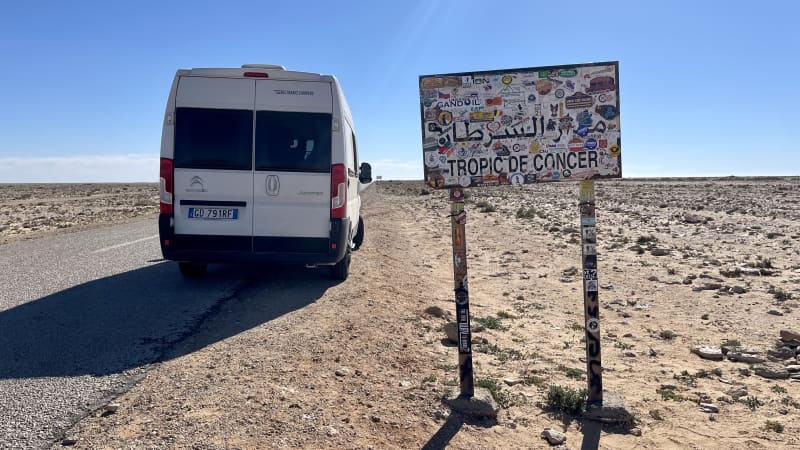
Day 22: we took advantage of the “waste disposal” (if you can call it that) available at PK25, filled up on water along the way, and drove for 3 hours, passing the famous Tropic of Cancer sign, to reach Barbate, a small fishing village.
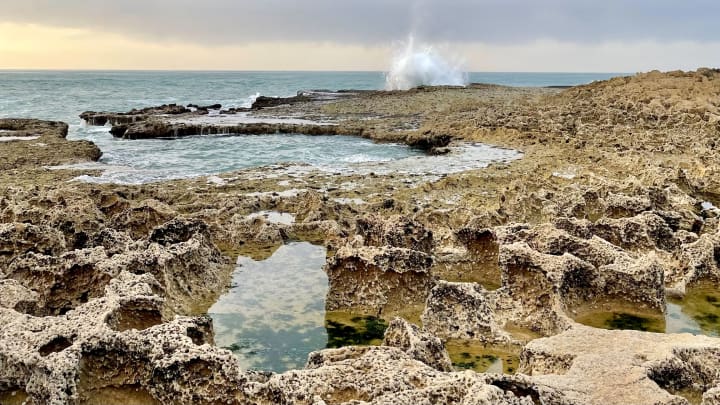
Day 23: we walked along the coast in this very quiet area, then headed after lunch to the southern border to enter Mauritania the following day. That, however, is another story you can follow here.
If instead you want to read how our adventure in Morocco continues, you can do so by clicking here!
In Brief
Day 1: Assilah
Day 2: Larache, Moulay Bousselham
Day 3: Salè, Rabat
Day 4: El Jadida, Ouladida
Day 5: Safi, Souira Qdima
Day 6-7: Essaouira
Day 8: Sidi Kaouki
Day 9-10: Had Draa, Imsouane
Day 11: Agadir, Tifnit
Day 12-13: Tiznit
⚠️ From here you can continue the trip towards the interior
Day 14: Mirleft, Sidi Ifni, Legzira
Day 15: Guelmin and the camel market, the Tighmert oasis, Tan Tan
Day 16: Akhfennir, Tarfaya
Day 17: Laayoune
Day 18-19: Boudjour, Oued Karaa
Day 20-21: Dakhla
Day 22: Barbate
Day 23: Border with Mauritania
Fake Guards
We first read these words while looking for a spot on the various apps we use to travel (find them all here (guide in Italian)). One review read:
Watch out for fake guards
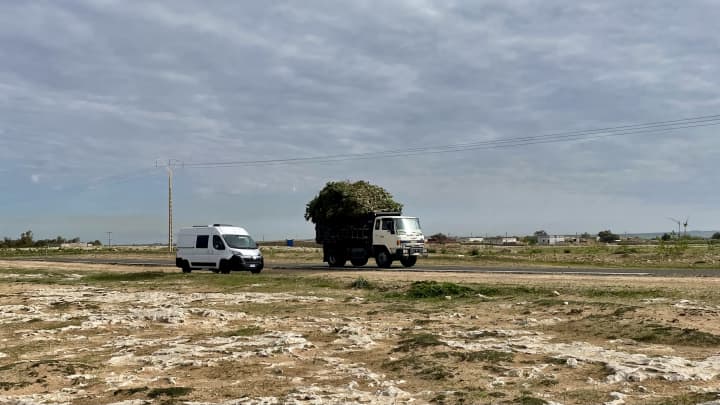
We didn’t understand it right away, thinking it referred to fake policemen. Naive of us. Over time we realised that “fake guards” refers to the “unofficial parking attendants” who occupy every car park in Morocco. Sitting on a chair in a yellow vest, they wait for a car or a tourist to arrive, then show up at your window asking for money, usually around 10/20dh (1/2 euro).
The problem isn’t the money, but the fact that, all too often, we felt taken for a ride, since they’d present themselves as daytime or night watchmen, only to take the money and vanish, or come back the next day to ask for more. On some occasions (like at the Ouzoud Waterfalls or in Mirleft) they asked us for money even though there was a “free parking” sign.
On top of that, the car parks are full of rubbish — if I’m paying you, couldn’t you at least keep it clean?
He introduced himself as the guardian of the whole area: a lake.
Are All Car Parks Unofficial?
Most of the parking attendants are unofficial, especially near tourist sites, but not all of them. In some big cities like Marrakech or along the Mediterranean coast, there are genuine paid, supervised car parks. Near Tetouan, by the sea, the guard stayed all night watching over us and other campervanners.
How to Handle It
Over time, living in the country and talking with other campervanners, we figured out how it works and how to avoid it. From the start we decided not to feed this unofficial parking system too much, adopting a simple rule — or rather, a phrase (in French) to say with a smile:
La gendarmerie nous a dit de venir ici.
which translates to
The gendarmerie told us to come here.
You don’t need perfect pronunciation, since the word “gendarmerie” alone will usually make them give up. We still recommend leaving if they turn aggressive.
He introduced himself as the parking guard, but we ended up pelted with balls and a few stones by the local kids. The next day I refused and didn’t pay.
Do Real Guards Exist?
Not every car park is like this. A few times we did come across genuinely supervised car parks with prices posted. For example, in Cabo Negro we didn’t know where to sleep and stopped at a spot found on Park4Night with a sea view, marked as supervised — and it really was! The guard sat all night on his chair watching over us and three other campervans!
We also paid at the palm grove in Tafraout, an enchanting place, where guards would spend the night with torches for 15dh, keeping watch over the area.
Final Thoughts
Our first approach to Morocco, entering via Tanger Med, wasn’t the best. We were immediately put off by the sheer amount of rubbish everywhere: entire open-air dumps, populated by animals eating plastic and children running and playing among the debris. Our spirits lifted as we walked through the streets of Assilah, and then we went on to enjoy pleasant Rabat, Essaouira, the Legzira coast and its cliffs, all the way to Dakhla. The road to reach Dakhla, and from Dakhla to the Mauritanian border, can feel endless and dull, but some glimpses of these landscapes truly left us breathless!
Unmissable Stops
On a trip like this:
- Assilah: a colourful, cheerful town, lovely to look at, that gives you a warm welcome as soon as you enter Morocco
- Rabat and Salé: we’ve already said a lot about Rabat in the dedicated article, but we can sum up this capital in three words: modern, elegant and bold. Worth seeing together with its twin city, Salé.
- Essaouira: a pearl overlooking the Atlantic Ocean. Not to be missed.
- Had Draa: going to the Had Draa market is like diving into the past. Be warned, some parts are not for the faint of heart!
- Oued Karaa and Barbate: two peaceful places to stop and enjoy some calm and quiet.
Stops You Can Skip
We chose to see all of Morocco, but if we went back, we’d happily skip these stops.
- Moulay Bousselham: as beautiful in photos as it is unappealing in person. It’s also not the easiest to reach.
- Boudjour: fine as a stop for a break, but nothing more.
- Agadir: everything you wouldn’t want to see in Morocco: European-style opulence.
Our Vlog
If you want to relive our adventures, you can do so below, or find the full series by clicking here :
Our Maps
This map includes all the places we visited, our stops (find the 5 best here), campsites, shops, and pizzerias (discover the best ones) throughout all of Morocco. Don’t be afraid to click the button in the top-left corner to enable/disable the layers you’re interested in!
If you'd like to thank us, you can offer a 🍪 for our furry friends at the following link:
PayPal - Satispay

Scan the code and thank you! 🐱🙏




Safe travels across the bridge, little big Olimpia

Madrid in 1 Day for Free

How to Enter Iraqi Kurdistan: Complete Guide for Travellers

Kosovo by Van: A Journey Discovering a Still Unknown Land

A Different Japan: 14 Days on the Road in Wild Kyushu

From the Windmills of La Mancha to Toledo: A Spectacular Campervan Tour!

Here’s How to Enter Japan with a Vehicle Without a Carnet de Passages

An alternative wedding: 30 days to plan it from a van
📝 Click to load Disqus comments
Comments will load dynamically