
read also
Belgium by Campervan: 3 Unmissable Stops


Our trip to Denmark by campervan was our first long trip after a few weekends spent around Piedmont. Some people thought we were crazy, while we had an absolute blast. We slept 29 nights for free, filling up on water and emptying the tanks with no trouble at dedicated stops found almost always along the motorway or near towns.
It’s a trip we loved for so many reasons: it was our first “long” adventure, the local people turned out to be extremely kind, the places to visit are spectacular. We spent 2,000 euros in total, including every single expense, for a month by campervan in Denmark. Let’s get going — or rather, if you set off after reading this article, send us a photo, we’d genuinely love that!
Table of contents
The itinerary is split into three parts:
Day 1: we set off from Turin towards Chiasso. We hit heavy traffic around Como due to flooding and motorway works, had a quick dinner at a service area around 9pm before crossing the St Gotthard, made the most of the summer daylight to get across Switzerland and arrived straight at Freiburg im Breisgau at one in the morning! Luckily we stayed overnight next to other vans in a quiet residential area.
Day 2: after breakfast we walked to the town centre, about twenty minutes away, admiring the area’s typical architectural style and the pleasantly clean streets dotted with small canals.
Watch out: legend has it that if you trip into one of these canals, you’ll end up marrying a citizen of Freiburg!
Take the time to observe the details of the shop signs, the walls of the inner alleys covered in unusual murals. Everything in Freiburg is well kept and colourful. We then headed to the park from which you can admire the city from above, also reachable by cable car if you’d like. Back in the streets of the centre, we returned to Münsterplatz, home to the Saturday morning market. At 3pm we set off again towards Rottweil. The village is small and quiet, with pretty coloured houses and decorations on the shop signs. Unfortunately on a Saturday afternoon almost everything was closed. So we continued our journey, leaving the Black Forest and Rhineland area for a future trip. An accident on the road, combined with hunger and tiredness, made us take a detour, and we stopped at a spot in the surrounding countryside for dinner before driving another hour or so.
Day 3: we woke up to rain and decided to set off straight away towards Würzburg. On Sundays parking is free in the city, so we parked right on the river near the “Alte Mainbrücke” bridge, from which, following a signposted route, you can reach the Residenz, the Baroque UNESCO World Heritage palace with its clean, well-kept gardens, and after a 40-minute walk, the “Festung Marienberg” fortress atop the hill. The view over the city from above is truly striking, especially considering half of it was razed to the ground by bombing in 1945. The nearby gardens, full of statues and decorated flowerbeds, are worth a visit too. After Würzburg we decided to stop in Gifhorn, at a spot right on the lake, wonderful!
Day 4: after a lovely morning walk we set off again towards Bremen and parked for free near the Becks brewery, from where, crossing a bridge, we reached the town centre directly. We headed to Böttcherstraße, drawn by the smell of roasted coffee (it was here that Hag’s decaffeinated coffee was created), then to the main square to see the statue of the Bremen Town Musicians, bought some chocolate at the famous “Hachez” shop, and moved first to the Schnoor quarter, once home to the city’s sailors, then to Das Viertel, the artists’ quarter dotted with murals and colourful houses. We left the city to sleep at Lake Bistensee, just before our last German stop.

Day 5: we set off again towards Flensburg to shop and fill up on fuel, reached a nearby water/waste disposal area and then crossed the border, without being stopped at customs. First Danish stop: Tønder! Here we immediately admired the tidy, colourful houses, with no curtains at the windows but candles and decorative objects instead. We then moved to Møgeltønder to a stopover area, in a village that welcomed us with a tree-lined cobbled avenue and houses with thatched roofs and exposed brick. A genuine little gem. Keep an eye out in front of the houses — you might find small boxes with homemade jam for sale.
Day 6: we took advantage of the morning opening hours to visit Møgeltønder’s church, home to Denmark’s oldest organ and a beautifully kept interior with frescoes covering the whole vault. We set off towards the island of Rømø, reachable via a strip of land that also hosts a cycle path — a commendable feature of the cycle-path network that extends across the whole country. After a small stop at Otto & Ani's Fisk to enjoy a shrimp sandwich right on the harbour, we continued to the nearby Sønderstrand beach before having lunch at Lakolk. Here you can park right on the beach: just be careful to follow the tracks of other campervans and not get stuck in the sand!

We rested for a couple of hours enjoying the sunny day and headed to Ribe, Denmark’s oldest town. The centre is a maze of little streets with crooked, colourful houses, a genuinely relaxing atmosphere: by now we’d realised that everything here is looked after down to the smallest detail, and you’d want to move in with them and read a good book on those inviting armchairs. Very charming is the small harbour where the Johanne Dan is moored , an old sailing boat designed with a flat hull to navigate Ribe’s shallow waters. This town was devastated by floods in the past, and even today its residents are required to evacuate in certain situations. We could have visited the Viking museum or joined the evening night watchman’s round, but we decided to cover more ground and stayed overnight on the coast, with a view of a spectacular sunset.

Day 7: we woke up to a light, cool drizzle and set off towards the “Men at Sea” statues , four big white men looking out to sea, found in Esbjerg. From here on the road became a steady succession of low houses, small hills and meadows, all the way to Hvide Sande and the Lyngvig lighthouse. Dunes, sand, sea, wind, blue sky.
We had lunch at a kitesurfers’ car park overlooking the Ringkøbing fjord, then moved on to visit the village and its characteristic little harbour 10 km away, with fishermen’s houses contrasting with modern homes. We continued to Thyborøn, where you can admire the “sneglehuset”, a house entirely covered in shells, the maritime museum, and the open-air museum commemorating the Battle of Jutland of 1916. The last stop of the day was the Bovbjerg lighthouse, whose red colour contrasts perfectly with the blue sky and the beach at the foot of the cliffs. We stopped to admire the view, then moved on to sleep at the Lemvig fjord.
Day 8: after an eventful night due to strong wind, we took a stroll around the town along the little harbour and set off towards Rubjerg Knude Fyr, the lighthouse perched over the sea, nestled among the dunes, which in 2015 was moved since, due to coastal erosion, it was at risk of collapsing into the sea! It’s reached from the car park by a twenty-minute walk in the sand: don’t be afraid to leave your shoes along the roadside, because you’ll definitely find them again. After admiring the lighthouse we moved to Rubjerg Mile, a genuine sand desert, where you can run from one dune to another. It was a spectacularly sunny day. Our second-to-last stop was “Den Tilsandede Kirke”, the church that had literally been swallowed by the sand, of which only the bell tower can now be seen.
Reaching nearby Skagen, we then headed to Grenen, the northernmost point of Denmark, where the two seas meet. A lovely half-hour walk to watch some fearless swimmers diving into the current, and then we went looking for a spot for the night from which to admire a beautiful sunset too.

Day 9: we said goodbye to the sea looking out from the dune and set off towards Frederikshavn: the town didn’t move us much, but we happily took a walk in the botanical garden 4 km from the centre, where to our delight we got a close encounter with some deer living peacefully in the park. We then reached nearby Sæby and strolled along the small central street, among low, colourful houses and well-kept gardens. Our next stop was the “Viking cemetery of Aalborg”, with about 700 graves arranged on a small hill. Very striking. Unfortunately it started raining, turning to hail, so we were forced to see the city in a rush, with its long river redeveloped with modern buildings and its inner streets in cobblestone and coloured brick. We filled up on water and emptied the tanks at a motorway stop and stopped in Hobro, on the pier of the Mariager fjord, just in time for a sunset photo before the rain started again.
Day 10: we visited nearby Mariager under an umbrella and bought a cinnamon roll and some rye bread. We moved to Ebeltoft for lunch at the harbour. Nearby there’s a ship you can visit, or you can stroll along Adelgade, the main street with shops and boutiques. Since it had started raining again, we headed to Aarhus. Nestled among the buildings is the oldest street, with characteristic colourful houses. The harbour area, on the other hand, is an explosion of modernity, with its skyscrapers and the “Iceberg” complex, a genuinely striking contrast. The weather gave us a break at sunset, so we decided to visit “Den Gamle By” during closing hours: it’s a faithful reproduction of the town from the 1800s to today, with perfectly reconstructed buildings. During opening hours you can see the shops open and some people in period costume. We visited it with only a few other people around and still admired its charm regardless. For the night we moved a few kilometres, right overlooking the beach and the sea.
Day 11: early in the morning we visited the Infinite Bridge, a circular bridge over the sea that gives the impression of being able to walk endlessly out to sea, and we headed to the ARoS contemporary art museum: its 10 floors are inspired by the Divine Comedy, so starting from the 10th floor — a rainbow-coloured mirrored walkway overlooking the city 360 degrees, representing paradise — we made our way down through all the exhibitions to the ground floor. Leaving the city in the rain, we headed towards Ry and Silkeborg, in our opinion two places you can skip unless you’re interested in visiting the “Aqua” aquarium. Lovely was the small forest we drove through to get there, a play of light between trees and moss. We arrived around 5pm at Legoland to ask about free entry half an hour before closing, but discovered they’d scrapped it a few years back. We looked for parking near a huge dog park to let Olimpia have fun and spend the night.

Day 12: we woke up with little candles to celebrate the first birthday of Sakè, our cat, then headed to Legoland: keep in mind that at 10am there are already plenty of people in front of the entrance, which is why we recommend buying tickets online, including the parking ticket, which gets refunded on the way out.
The Miniland area is truly fantastic, countries reproduced in detail, with trains, planes, buildings, scenes of human life. All around are rides in the style of Gardaland. Pets are allowed in the park, but obviously not in indoor spaces, so we ate our packed lunch at one of the many picnic tables provided (if you want, there are also several options to eat indoors) and headed back to the campervan, just in time before a downpour started that didn’t let up until late at night. Along the way we stopped in Jelling, a Danish pilgrimage site home to ancient runes, and Fredericia, to take advantage of a coin laundrette. The plan was to stop on the beach for the night, but given the weather we decided to make up time by heading towards Odense, and after filling up on water and emptying the tanks at a motorway stop, we stopped at a quiet little spot, with a small church overlooking the lake.
Day 13: Odense is the hometown of the writer Andersen, and most of the museums are dedicated to him. The centre is one big open-air building site, so we dedicated a visit to the old part, peeking into the lovely Kramboden antiques shop, among the colourful houses of the district around the famous writer’s birthplace, and taking a stroll in the park. From Odense we headed to Fåborg, having lunch with a harbour view, strolling along the small pedestrian street, and buying tuna and salmon fiskefrikadeller (fishcakes) from Røgeriet before leaving: delicious! Our pre-dinner drink while waiting for the ferry from Svendborg took us to the island of Ærøskøbing. We could have taken it directly from Fåborg, but unfortunately the tickets were sold out. Once on the island, we headed to the car park just in time to admire the sunset overlooking the colourful houses.

Day 14: we dedicated the morning to visiting the small town, a genuine little gem with its doors and colourful houses, bought smoked fish, made the most of the sun to warm up after the last few days’ rain, and dipped our feet in the water, watching and admiring the daredevils diving in without a second thought.
Day 15: we decided to spend some time exploring the little island, so in the morning we visited Marstal, where you can still find some colourful houses overlooking the sea, then moved on to have lunch with an ocean view at a spot where we didn’t meet a soul. It was quite windy, so around 4pm we moved to the Søby lighthouse before heading back to our spot by the sea at Ærøskøbing. Three sunsets in that spot filled our eyes and hearts with wonder.

Day 16: in the morning everything opened a bit late, so we had a coffee in the campervan after walking once more through the colourful streets, waiting for the ferry that would take us back to Svendborg. Here, with the cold as an excuse, we decided to set off for Egeskov Slot castle . A fairly violent storm started along the way, so we waited it out in the car park and bought tickets online (they cost slightly less). The castle is well kept and full of detail, and the grounds are truly noteworthy too: various mazes, a dahlia garden, centuries-old trees, the rose garden, playgrounds for kids, a Tibetan bridge and various museums of vintage cars and vehicles, with a section dedicated to camping too. It’s worth spending at least a couple of hours here. In the early afternoon we set off towards Copenhagen.
We encountered some roadworks along the way, crossed the famous suspension bridge about 18 km long, truly fascinating, and reached the capital. It was Saturday evening, so parking was free until Monday morning. We parked near the Tivoli Gardens and, after a walk with the animals, visited the famous amusement park. Lights and restaurants take centre stage. The real show, besides the light displays, is the roughly 5-minute fireworks finale (if you can, grab a deck chair and make yourself comfortable!).
Day 17: mid-August in the city meant few people around, shops and galleries half-closed and heavy car traffic. Regardless, we walked about 22 km, between Strøget, the main shopping street, then saw Rosenborg Castle and Christiansborg Palace , the Nyhavn canal, the Little Mermaid statue and the Kastellet, Frederik’s Church, before eventually reaching the Vesterbro skate park. Unfortunately we have to admit Copenhagen was much less to our liking than the rest of the country.
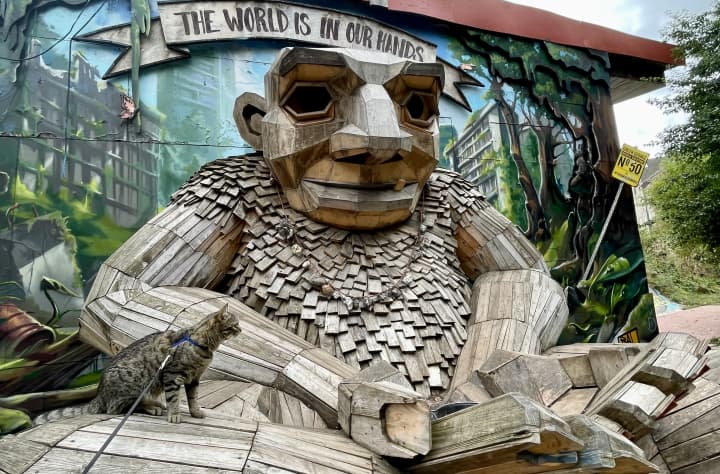
Day 18: we dedicated the morning to Christiania and the library district, then moved on for lunch at Reffen, the street food spot on the canal. It was pouring with rain; we reached Dragør, a small fishing village with yellow houses and thatched roofs, but we only just managed to see the main street. The weather wasn’t on our side, so we continued north towards Helsingør to stop on the coast.
Day 19: it poured all night, and we woke up to 13 degrees in the rain. We visited Hamlet's Castle , a place full of charm. The exhibition on period costumes was interesting. The village is nice, but the rain was getting us down, so we set off again towards the island of Møn. The bad weather stayed with us the whole way, until treating us to a beautiful rainbow in the car park at Stege. It was very windy, so we decided not to stop at the harbour but to hole up at another car park to spend a peaceful night.

Day 20: Stege has a nice little street full of interesting small shops and an excellent bakery-pâtisserie where we refuelled. That day they were closing off all the streets in the centre for an event, so we had to move to the harbour, and we stayed holed up in the campervan due to the strong wind and rain gusts. Around 5pm we decided to move to the northernmost little island and sleep on the north-eastern coast.
Day 21: we strolled undisturbed among the houses and stayed on the beach until the afternoon. We headed to the Borre 326 gallery (now permanently closed, but its works can still be bought at the Liza Gallery in Stege ) to buy a painting we’d seen in Stege that had really struck us. With very strong wind as an excuse, we decided to stop at a nearby car park.

Day 22-23: in the morning we visited the Møns Klint cliffs. Come armed with patience, as the 500 steps down to the beach are rewarded with a beautiful view. From there we moved to a spot not too far away on the seafront, where we stopped to rest for a few days. Just the sound of the sea waves, a wonderful view, the wind, walks in the countryside.
Day 24: we moved towards Rødby, buying fresh bread and a slice of pizza at an Italian bakery . Here we enjoyed our last Danish sunset on the beach and fled the next morning from an invasion of mosquitoes and midges.
Day 25: we reached Rødbyhavn to take the ferry and land in Germany at Puttgarden. We stopped on the German coast for a lunch break, then arrived at Lübeck: beautiful, welcoming, clean, with its lovely coloured buildings along the river and its many inner courtyards. We moved on to Lüneburg for the night.
Day 26: we visited Lüneburg in the morning: small, well-kept streets, typical buildings with well-maintained façades, a town that felt very human-scale to us. We set off again, crossing some genuinely striking stretches surrounded only by expanses of trees, and arrived in the late afternoon in the centre of Frankfurt am Main, just in time to enjoy the sunset over the skyline and admire a rather different backdrop. The riverside walk was lovely, as was the square with its period buildings, the area around Goethe’s house, and the whole park stretching out in the shadow of the skyscrapers. We didn’t stop in the city, though, to get ahead and have time to visit a piece of the Black Forest.
Day 27: we reached Baden-Baden, visiting it in the morning: the casino area was very well kept and clean, as was the whole riverside walk leading to the rose garden. A lovely little spot, a shame we didn’t have much time to enjoy the thermal baths. We took the B500, which crosses the Black Forest, stopping in Alpirsbach, where we bought some beer chocolates, before reaching Haslach im Kinzigtal, where we had dinner with some really good beer.
Day 28: we reached Triberg, the village of cuckoo clocks, visiting the House of 1,000 Clocks, genuinely surprising work considering every detail is handmade. We decided to skip the visit to the waterfalls due to the bad weather and consoled ourselves by buying a slice of the famous Black Forest cake, with its unpronounceable name.
Day 29: we woke up to 10 degrees, wrapped in fog. All around the car park, lovely mountain walks began, so we ventured out without going too far. After lunch the sun came out, and we decided to visit Lake Titisee, walking its perimeter over a couple of hours. A truly lovely way to close the holiday. We stopped just before the border to make the most of the remaining data roaming, and the next day headed back into Italy, stopping first in Bern to say hello to friends, then crossing the Great St Bernard Tunnel all the way to Turin, and rushing to find an open pizzeria.
Day 1-2: Freiburg im Breisgau and Rottweil
Day 3: Würzburg
Day 4: Bremen
Day 5: Tønder
Day 6: Møgeltønder, Lakolk and Ribe
Day 7: Esbjerg, Hvide Sande and the Lyngvig lighthouse, the Bovbjerg lighthouse
Day 8: Rubjerg Knude Fyr, the Rubjerg Mile desert, the Den Tilsandede Kirke church, Skagen and Grenen
Day 9: Frederikshavn, Sæby, the Viking cemetery of Aalborg, Hobro and the Mariager fjord
Day 10: Mariager, Ebeltoft, Aarhus
Day 11: Aarhus
Day 12: Legoland, Jelling and Fredericia
Day 13: Odense, Fåborg, the island of Ærøskøbing
Day 14-15: the island of Ærøskøbing
Day 16: Egeskov Slot castle
Day 17-18: Copenhagen
Day 19: Helsingør, Hamlet’s Castle
Day 20-21: Stege and surroundings
Day 22-23: the Møns Klint cliffs
Day 24: Rødby
Day 25: Rødbyhavn, Puttgarden, Lübeck
Day 26: Lüneburg, Frankfurt am Main
Day 27: Baden-Baden, Black Forest, Alpirsbach and Haslach im Kinzigtal
Day 28: Triberg
Day 29: Lake Titisee, Bern
Throughout Denmark we found the roads in perfect condition, and the motorway is toll-free. Ferries and bridges, on the other hand, are paid, the latter depending on the length and size of the vehicle.
We had no trouble at all with free overnight stays, always respecting the rules of each location.

One thing that will make your faithful animals happy is the presence of huge dog parks! Unlike the Italian ones, which are small patches of land, often neglected and unpaved, here they’re huge green meadows with bushes, trees and trails to walk!




📝 Click to load Disqus comments
Comments will load dynamically