
read also
Northern Spain by Campervan | Complete Guide and Itinerary


We visited Andalusia in two stages, the first in early January 2023 and the second in June 2023, once back from Morocco . In both these periods it’s easier to find spots to stay overnight for free, although when we came back to Europe we found more “no parking” signs. In summer we can’t guarantee you’ll easily find places to stop.
In January we arrived in this Spanish region directly from Portugal, visiting part of it. We loved some of Andalusia’s quirks, while others (especially the coastal tourist resorts) we didn’t like much. In this article we won’t share our full daily diary, since we spent a month in this region for work and family reasons, but we’ll still take you with us from Seville to Granada, through the characteristic white villages, venturing onto the Caminito del Rey, discovering unexpected historic places, and heading a bit inland too, giving you a couple of itinerary options. Vamos!
Table of contents
The stops we list below were all reached aboard our small van, but you can do them by motorbike, car or a larger vehicle too. Just pay attention to your campervan’s length if you want to reach some places like Mijas Pueblo or the Caminito del Rey via Álora.
If you want to read our itinerary in short, you’ll find it by clicking here, while if you want to know our thoughts and which stops we consider unmissable, you can click here.
Day 1: entering Andalusia coming from Portugal, our first destination was El Rocío, a small characteristic village nestled in Doñana National Park, famous for the Romería del Rocío (celebrated on Pentecost Sunday) when it becomes a pilgrimage site gathering a million devotees. We stayed overnight for free on the coast.
Day 2-3: we moved to Santiponce, 15 km from Seville, to discover the Roman archaeological site of Italica and the Sanctuary of San Isidoro, both pleasant and free to visit. At the Italica Oil station we filled up on diesel at a genuinely good price.
Next we moved to Seville, to a free car park half an hour’s walk from the city centre, which we immediately headed to, strolling through its streets, crossing the bridge from the Triana district, reaching Plaza de España to admire every square inch of its wonderful architecture. We then headed to the University, the Cathedral and the Giralda, getting lost in the streets of Santa Cruz, took a look at the General Archive of the Indies, and moved on to Las Setas to admire from outside the construction of the shopping centre and its walkway. We stayed overnight for free. The next day we again walked to the city centre, or Casco Antiguo, visiting the Alcázar in the morning (we recommend buying tickets in advance here ), the famous royal palace with its gardens, then getting lost in the little streets eating empanadas, before heading back to the van and moving on to Chipiona. We stayed overnight for free on the coast.
Day 4-5: we visited Chipiona before heading to Cádiz. For the night we preferred a car park a bit outside the city overlooking the coast, while during the day we headed to the centre. Given the bad weather, our visit was fairly quick, but we still managed to stroll through the streets, reaching the Roman theatre, the Cathedral, Playa de la Caleta, the Castillo de Santa Catalina, Genovés Park and the century-old ficus tree in the Clara Campoamor garden.
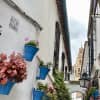
Day 6-7: arriving in Conil de la Frontera we first admired the coast north of the small village, then got lost strolling among the white houses, brought to life in our case by the parade of the Los Reyes Magos (the Three Kings), the famous celebration once far bigger than Christmas here. Every year on this day, figures dressed as the Three Kings can be seen parading through every village, in one of the country’s most famous celebrations.
Day 8: another characteristic village, very pleasant to visit thanks also to its hilltop position, is Vejer de la Frontera. Not far away, we recommend a visit to El Palmar, a very beautiful beach popular with surfers, offering breathtaking sunsets.
Day 9: on the way to Tarifa, we highly recommend a stop at Playa de Bolonia. Here you can take beautiful walks and visit, for free, a Roman archaeological site, Baelo Claudia, which in our opinion is worth a visit just for its location and postcard-worthy views.
Day 10: Tarifa is a town full of surf lovers. We visited it quickly, just enough time to walk along the walkway dividing the Mediterranean Sea from the Atlantic Ocean.
Day 11: want to take a mental trip to Great Britain and watch monkeys scurry around you? Gibraltar is the right destination! If you’re thinking of visiting, remember to bring your passport! After customs checks (you can enter by car/campervan, or leave your vehicle just outside the city to avoid struggling to find parking in the narrow central streets), you have to cross the airport runway, then you can carry straight on if you want to walk along the main street, or take the cable car on the left and head to the nature reserve ( at this link you’ll find the relevant information). We only visited the “free” part; if you want to see more Barbary macaques you need to buy the ticket for the reserve.
Here are two tips:
Day 12: Marbella is a typical seaside resort, a very lively town with plenty of amenities if that’s what you’re looking for. If you want to visit a place immersed in nature overlooking the coast, we recommend the nearby Artola Dunes.
From Marbella you could decide to head towards Málaga and Granada, making a couple of stops in Álora and at the Caminito del Rey, or head inland to admire the small villages of Ronda and Setenil de las Bodegas.
Here are the two options:
Day 13: continuing along the coast, we made a detour to Mijas Pueblo, a small village perched on the hill and famous for its donkeys (be careful, as the road is narrow and all uphill), to Fuengirola and Benalmádena, where we recommend a visit to the unusual “Castillo de Colomares”, a monument dedicated to Christopher Columbus.
Day 14: Álora is a village halfway between Málaga and the Caminito del Rey. A cluster of white houses in a row along uphill and downhill streets, it offers a wonderful 360° view over the plain below from the ruins of the old castle, walkable along the perimeter of the walls.
Day 15: if you don’t suffer from vertigo and fancy a great nature hike, then the Caminito del Rey is for you. Walking on the bridge suspended 100 metres up gives you unique thrills. We preferred to do the guided tour (€18 per person for a couple of hours’ visit in English and Spanish), and we recommend booking the free visit in advance either way, to avoid a wasted trip! If you arrive by campervan/van, there’s a great car park under the trees a couple of kilometres from the ticket office.
Day 16: we didn’t like Málaga much. The city centre is a constant string of fashion shops, which takes away some of its authentic charm. For lunch we had tapas and drank cerveza at the covered market, which is worth a visit if only to admire its façade. The ruins of the Alcazaba offer a view over the city from above.
Day 17-18: we reached Granada, stopping at the Balcón de Europa in Nerja to admire the view over the coast. The city is a blend of art, history and culture. Visiting the Alhambra is truly worth it ( click here for information on tickets, which must be booked online), as is strolling aimlessly through the narrow streets and taking in the city surrounded by the mountains of the Sierra Nevada. If you get hungry, don’t worry, you’ll find plenty of places open at all hours. One tip: don’t rush!
Day 13: we arrived in Ronda through breathtaking scenery. The central streets are very narrow; we recommend parking outside the city to avoid trouble. When we visited, the path down to see the bridge from below was closed, but we still got to admire the Puente Viejo, the Casa del Rey Moro, the main street “Calle la Bola”, Plaza de España and the various miradors. If you fancy tapas, at “ El Lechuguita ” there are said to be plenty of tapas for €1 (unfortunately it was closed for holidays when we were in town!). On one of the apps we use for campervan travellers, we’d found a car park overlooking the bridge. We don’t recommend it, since we nearly failed to get back onto the road, our wheels were slipping so much.
Day 14: Setenil is another village where it’s worth parking just outside town and strolling slowly through the little streets, partly so as not to miss the spectacle of the houses set into the rock, and partly because of all the climbs! 14 km from the town is a Roman site, Acinipo , which doesn’t offer any particularly grand remains, but the view all around is truly magical. We stayed overnight alone in the car park and visited it for free in the morning before getting back on the road.
Day 15-16: our visit to Córdoba was decidedly interesting. The first site we reached was the ruins of Medina Azahara , which in our opinion is worth visiting if only because it’s free. You can park in the car park 2 km away and reach it on foot or via the shuttle (€3 return). Not too far away you’ll also find the Almodóvar del Río castle , which we didn’t have time to visit. We stayed overnight for free near Córdoba’s zoo. From the car park, the city centre is easily reached on foot in about twenty minutes. We recommend admiring the Roman bridge, the Mosque-Cathedral (free from 8.30am to 9.30am Mon-Sat) and its gardens, the many flower-decorated streets and courtyards, the Jewish quarter and the small synagogue. The city is also home to the Alcázar , which we didn’t visit since we’d already been to the ones in Seville and Granada.
A small culinary tip: don’t miss a tortilla tapa at Bar Santos ! They serve you a slice of the famous dish in a giant portion, and you can sit and enjoy it on the church steps.
Here are two possible short itineraries.
Day 1: Córdoba
Day 2-3: Seville
Day 4: Cádiz
Day 5: Conil de la Frontera and Vejer de la Frontera
Day 6: Playa de Bolonia and the Baelo Claudia site
Day 7: Gibraltar
Day 8: Marbella and the Artola Dunes
Day 9: Caminito del Rey
Day 10: Málaga
Day 11-12: Granada
Day 1: Córdoba
Day 2-3: Seville
Day 4: Cádiz
Day 5: Conil de la Frontera and Vejer de la Frontera
Day 6: Playa de Bolonia and the Baelo Claudia site
Day 7: Gibraltar
Day 8: Marbella and the Artola Dunes
Day 9: Ronda
Day 10: Setenil de las Bodegas
Day 10: Caminito del Rey
Day 11-12: Granada
Throughout Andalusia we found the roads in perfect condition. The “autopista” toll motorway is paid, while the “autovía” is free.
We had no problems with free overnight stays, but keep in mind we travelled in the low season. If you go in summer you might find it harder to find parking, especially in coastal areas, given the number of tourists who choose this area for their holidays.
We didn’t know Andalusia, and we have to be honest, certain features of it pleasantly surprised us. Even though the weather isn’t the most favourable, you can feel a calm and peaceful atmosphere.
By campervan or car, in our opinion the unmissable destinations are:







📝 Click to load Disqus comments
Comments will load dynamically